
Strategic shifts have become a defining reality for organizations today. But despite the investment in strategy, systems, and transformation initiatives, many organizations still struggle to execute.
The issue isn’t with the strategy itself, but how leaders show up to deliver it.
But as Vivian Lewis, Vice President of Human Resources for Smile Train, reminds us, meaningful progress doesn’t come from shifting for the sake of it. It comes from intentional leadership, a clearly defined culture, and leaders who understand what ownership and accountability must look like in practice.
In a recent episode of our Lead the Future™ podcast, Dr. Vince Molinaro sat down with Vivian, to explore what it takes to lead a meaningful strategic shift across a globally integrated organization.
What emerged from the conversation highlights a familiar challenge many leadership teams continue to face: how to successfully navigate complex strategic shifts.
Vivian shares her real-world experience on the importance of getting intentional and disciplined about voicing the type of culture an enterprise would want to achieve a one-company mindset.
The Execution Gap Behind Strategic Shifts
Strategic shifts only gain traction when they are intentional and grounded in clear expectations. Without that, misalignment builds quietly and progress and execution stall.
Through leadership behaviors, the real shift begins when leaders stop operating in silos and start making decisions in the interest of the whole enterprise.
It’s the golden moment where leadership shifts not just for the sake of it, but in a manner that is meaningful, intentional, grounded in clear expectations and reinforced daily. It’s that time when conversations are direct, and shared accountability becomes something leaders actively practice with each other, not just talk about.
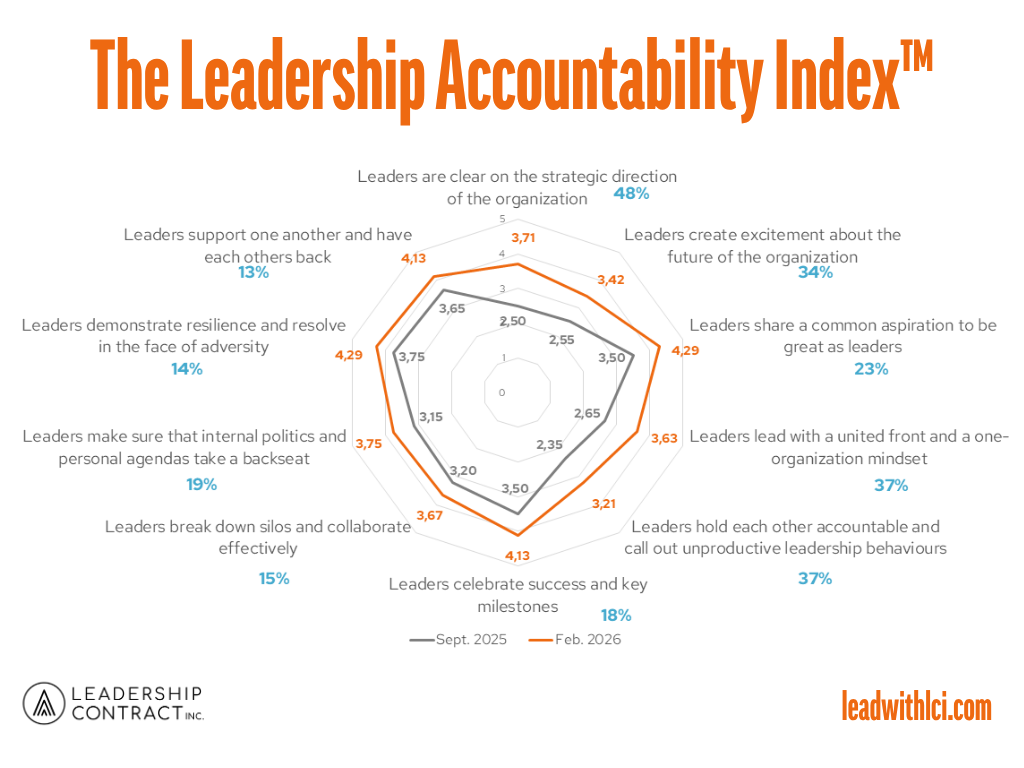
This is where many organizations struggle and where clarity becomes critical. Diagnostic tools like LCI’s Leadership Accountability Index ™ help leaders identify where misalignment, fragmented accountability, and execution gaps are already showing up.
Because you can’t fix what you can’t see.
Why Culture Can’t Be Left to Chance
One of the most important lessons from this conversation is simple, yet very often overlooked:
Organizational culture does not build itself.
Many businesses assume culture will evolve naturally. But without clear definition and reinforcement, it becomes fragmented.
Leaders don’t always share the same understanding of:
- What accountability looks like.
- What behaviors matter most.
- What success should feel like across the organization.
When these conversations don’t happen, culture becomes inconsistent and misalignment becomes evident.
Organizations that succeed take a different approach.
- They are intentional.
- They define culture clearly.
- They reinforce it consistently through clear leadership expectations and everyday actions.
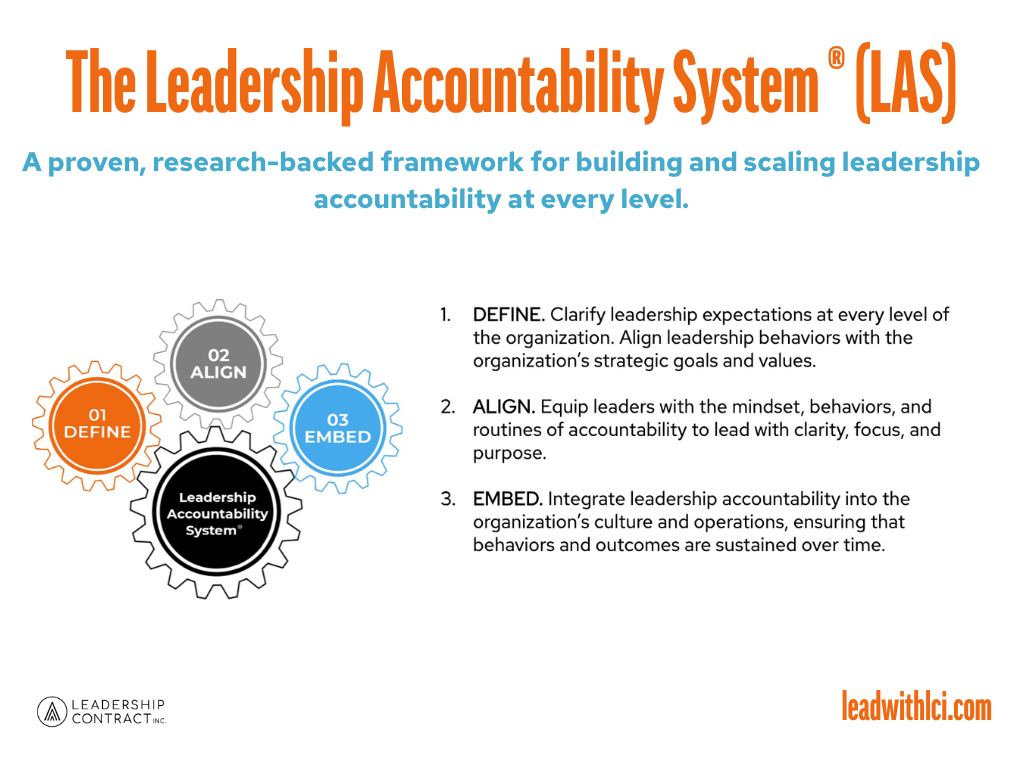
This is where a structured approach like the Leadership Accountability System™ becomes essential, ensuring culture is not left to interpretation, but embedded into how leaders operate across the business.
Moving Beyond Leadership Development Programs
Another common breakdown occurs in how organizations approach leadership development by thinking that training alone will get the job done.
Workshops, programs, and frameworks can create awareness, but they don’t guarantee a change in leadership behavior.
For leadership training to be effective, it must show up in how leaders operate day-to-day:
- How they make decisions.
- How they collaborate across teams.
- How they reinforce expectations with others
Without that reinforcement, development efforts fade, and organizations return to old habits.
The shift happens when accountability becomes part of the operating rhythm and not a once-off initiative.
Successful organizations begin to move beyond traditional training and invest in researched-backed leadership development programs, or Leadership Accountability Coaching to ensure leadership expectations are reinforced consistently at every level.
When Accountability Becomes Shared
One of the most powerful insights from Vivian’s real-world example is the role of shared accountability.
In many organizations, accountability is treated as individual responsibility. But in complex environments, success depends on how leaders work together.
That means:
- Addressing issues directly.
- Challenging each other constructively.
- Making decisions in the best interest of the organization and not as individuals or departments only.
This isn’t always easy.
It requires trust. It requires clarity and commitment, and it requires leaders to step up in ways that go beyond their immediate role.
But when it happens, something shifts. And organizations start to operate as one.
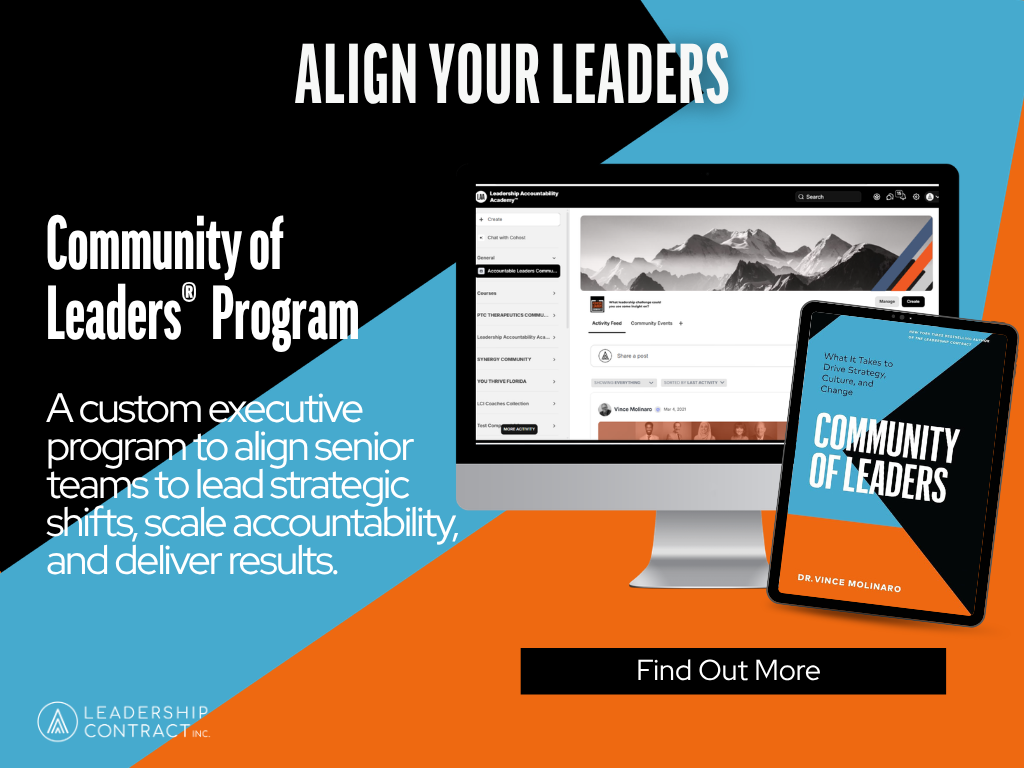
This is the foundation of what we describe in Community of Leaders where leaders move from individual success to collective responsibility.
Turning Strategy Into Execution
The organizations that navigate strategic challenges successfully share a few key characteristics:
- They define expectations clearly.
- They align leaders around a shared vision.
- They reinforce accountability through daily leadership practices.
More importantly; they create conditions where leaders can hold each other accountable in a constructive and productive way.
This is where strategy moves from intent to action. This is where execution starts to follow.
In many cases, this level of alignment is accelerated through focused interventions like strategic offsites, where leadership teams come together to align on priorities, expectations, and how they will operate as one.
The Clear Next Steps
Strategic challenges will continue to shape the future of organizations. The question is not whether change will happen, but how leaders will step up to the calling and practice shared accountability.
If your organization is navigating a strategic shift and execution isn’t where it needs to be, the issue may not be your strategy.
It may be how your leaders are aligned, how accountability is defined, and how consistently it is reinforced.
At Leadership Contract Inc., we work with organizations to close that gap by building aligned leadership teams, embedding accountability into culture, and turning strategy into sustained execution.
Ready to Move From Strategy to Execution?
If you’re serious about driving results through aligned, accountable leadership, book a strategy call and let’s start the conversation.
What is a strategic shift in an organization?
A strategic shift is a significant change in an organization’s direction, priorities, or operating model to respond to evolving business demands. It requires leaders to realign teams, redefine ownership, and adjust how strategy is executed across the organization.
Why do strategic shifts fail in organizations?
Strategic shifts fail when execution breaks down, but not because the strategy is wrong. The most common causes include misaligned leadership, unclear ownership, and inconsistent accountability, which creates silos and slow decision-making.
How can leaders successfully navigate a strategic shift?
Leaders successfully navigate strategic shifts by aligning around a shared vision, setting clear expectations, and reinforcing accountability daily. Consistency in leadership behavior is what turns strategy into execution.
What role does culture play in strategic shifts?
Culture determines how effectively a strategic shift is executed. When culture is not clearly defined, leaders operate inconsistently, leading to misalignment and stalled execution across teams.
How do you turn a strategic shift into execution?
Turning a strategic shift into execution requires clear ownership, aligned leadership, and shared accountability. Leaders must actively reinforce expectations and address gaps in real time to maintain momentum.